

Fingers crossed you did your work yesterday and have half you assessment ready to roll...
Today you need to take care of the second half:
1. Two Responses to Urban Sprawl and/or Urban Consolidation
2. Evaluate the effectiveness of one response: Choose either sprawl of consolidation and have your say whether you think it is effective or not.
Make sure you use the structure from yesterday for each paragraph:
1. Topic Sentence
2. Explain topic sentence.
3. Examples/Statistics
4. Explain relevance of Examples/Stats
5. What effect does this have on Sydney?
Subscribe To My Blog

 Posts
All Comments
Posts
All Comments
Monday, March 28, 2011

Sunday, March 27, 2011
Year 10 Monday 28/3: 9.2 Population Growth in Sydney
Using section 9.2 describe the issue of population growth in Sydney in a 5+ sentence paragraph. Use the following format.
1. Topic Sentence
2. Explain topic sentence.
3. Examples/Statistics
4. Explain relevance of Examples/Stats
5. What effect does this have on Sydney?
Then, in a paragraph for each, explain the two responses to population growth in Sydney using the paragraph format above.
1. Topic Sentence
2. Explain topic sentence.
3. Examples/Statistics
4. Explain relevance of Examples/Stats
5. What effect does this have on Sydney?
Then, in a paragraph for each, explain the two responses to population growth in Sydney using the paragraph format above.
Wednesday, March 23, 2011
Year 10: Urban Sprawl or Consolidation: Green Square
Have a look at this development: http://www.cityofsydney.nsw.gov.au/development/urbanrenewalprojects/greensquare/
What is this an example of?
What are the benefits of this development?
What could be a negative result of this development?
What is this an example of?
What are the benefits of this development?
What could be a negative result of this development?
Year 10: Urban Sprawl or Consolidation: Jordan Springs
Have a read of this article: http://penrith-press.whereilive.com.au/news/story/new-suburb-jordan-springs-pops-up-from-adi-site/
1. Is this an example of urban consolidation or urban sprawl? Why?
2. Do you think that this development is positive or negative for the surrounding community? For Sydney? For Australia?
Visit the development for more info: http://www.jordansprings.com.au/
Answer these questions in your own post on your blog.
1. Is this an example of urban consolidation or urban sprawl? Why?
2. Do you think that this development is positive or negative for the surrounding community? For Sydney? For Australia?
Visit the development for more info: http://www.jordansprings.com.au/
Answer these questions in your own post on your blog.
Wednesday, March 16, 2011
Assessment Prep: Urban Sprawl
Have a look at the upcoming assessment:
KNOX GRAMMAR SCHOOL
Year 10 Assessment Task 2 Notification
Term 1, Week 9, 2011
Task details
Assessment Task 2 is to be in the format of an in-class extended response to be completed over 40 minutes under test conditions.
Venue: In class
Tuesday 29 March: Period 2- Mr. Manuel’s 10J class
Wednesday 30 March: Period 1- Mr. Crighton’s 10F class, Mr. deBotton’s 10G class,
Mr. Shute’s 10 H class.
Thursday 31 March: Period 2- Mr. Shute’s 10D class, Mr. Crighton’s 10E class
Period 3- Mr. deBotton’s 10A class, Mr. Cavallaro’s 10B class,
Mr. Manuel’s 10C class.
Period 6- Mr. Cavallaro’s 10J class
Time
Time allowed: 40 minutes
Reading time: 5 minutes
Test weighting for year: 15%
Format of assessment task
Students will be asked to examine a particular geographical issue in the Australian environment, either Waste Management or Urban Growth and Decline, and to complete the following-
· Describe the issue
· Outline two responses to the issue
· Outline the perspectives of two different groups (NGOs, governments, individuals, businesses or groups) to the issue.
· Evaluate the effectiveness of ONE response to the issue.
Outcomes to be tested
A student:
5.1 identifies gathers and evaluates geographical information
5.2 analyses, organises and synthesises geographical information.
5.3 selects and uses appropriate written, oral and graphic forms to communicate geographical information
5.5 demonstrates a sense of place about Australian environments
5.7 analyses the impacts of different perspectives on geographical issues at local, national and global scales.
5.10 applies geographical knowledge, understanding and skills with knowledge of civics to demonstrate informed and active citizenship.
The issue that we are going to focus on is URBAN SPRAWL.
What you need to do is the following in a blog post of your own:
1. Identify specific examples of Urban Sprawl and Consolidation in Sydney and describe how these are examples of urban sprawl (include photos). (1 of each - consolidation and sprawl)
2. In one of these examples you need to identify and list all of the INVOLVED PARTIES - (NGOs, governments, individuals, businesses or groups)
3. Describe how all of these parties (at least two) are involved in this example of Urban Sprawl. Talk about what their interest is in this development/area of development. (At least two paragraphs for each group.)
4. What are the possible responses to the issue? Or, if there has been a response already, what is has been the response to this issue? (at least two responses)
5. Evaluate the effectiveness of one of the possible responses to this instance of Urban Sprawl.
1. Identify specific examples of Urban Sprawl and Consolidation in Sydney and describe how these are examples of urban sprawl (include photos). (1 of each - consolidation and sprawl)
2. In one of these examples you need to identify and list all of the INVOLVED PARTIES - (NGOs, governments, individuals, businesses or groups)
3. Describe how all of these parties (at least two) are involved in this example of Urban Sprawl. Talk about what their interest is in this development/area of development. (At least two paragraphs for each group.)
4. What are the possible responses to the issue? Or, if there has been a response already, what is has been the response to this issue? (at least two responses)
5. Evaluate the effectiveness of one of the possible responses to this instance of Urban Sprawl.
Monday, March 14, 2011
Year 10: Tuesday 15/3: The Most and Least Expensive Suburbs in Sydney
Classwork:
- List the top 5 most expensive suburbs. Why do you think that these suburbs are so expensive to live in? What can you say about where they are all located?
- List the top 5 least expensive suburbs. Why do you think that these suburbs are so inexpensive to live in? What can you say about where they are all located?
Homework:
9.2 Questions 1-14
Sunday, March 13, 2011
Year 9 Wednesday 16/3: The Earthquake and Tsunami in Japan
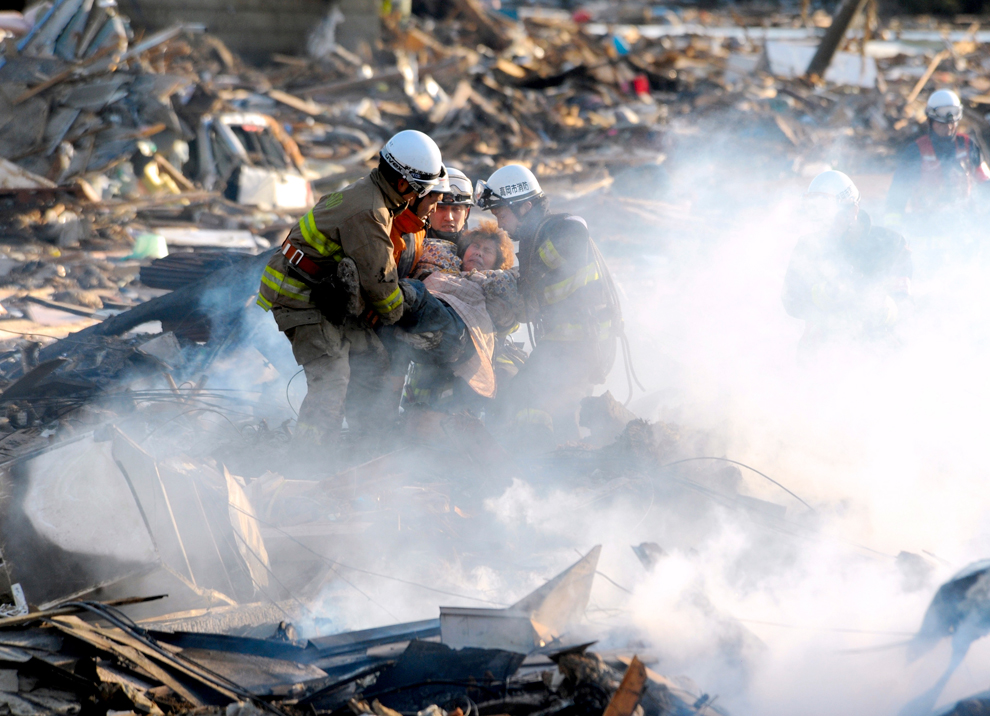
- Where was the epicentre of the earthquake?
- What was the size of the earthquake?
- What are some of the areas most effected? Describe the devastation and include an image.
- Describe the impending man-made disaster: what, where , why?
2. Catch up on last class's homework.
HW: 1.10 1-18
Thursday, March 10, 2011
Year 9 Fri 11/3: Australia's Natural Resources
Classwork:
(Include graphs in your answer)
1. Who is Australia's largest export partner? What products do they export with them? How much of each product do they export? For what purpose does that country need the products they import from Australia?
2. Who is Australia's largest import partner? What do they import from them? How much? Why do you think that Australia imports these goods from this country?
Homework:
Answer questions 1-18 on pg 35 of your text book.
(Include graphs in your answer)
1. Who is Australia's largest export partner? What products do they export with them? How much of each product do they export? For what purpose does that country need the products they import from Australia?
2. Who is Australia's largest import partner? What do they import from them? How much? Why do you think that Australia imports these goods from this country?
Homework:
Answer questions 1-18 on pg 35 of your text book.
Wednesday, March 9, 2011
Year 10 Mond 14/3: Urban Planning and Development
Many of you still need to define the words and give examples (photos work great) of each.
After that yall can get cranking on the questions on pg 213 1-12. These are due tomorrow so if you don't finish YOU'VE GOT HOMEWORK!!
CAV
After that yall can get cranking on the questions on pg 213 1-12. These are due tomorrow so if you don't finish YOU'VE GOT HOMEWORK!!
CAV
Monday, March 7, 2011
Year 10: Urban Renew and Decay
- Define the following terms and include an example of each and explain how your example relates the word:
- Aesthetics
- Safety
- Slums
- Decay
- Reconstruction and renewal
- Transport
- Suburbanization
- Environmental factors
- Light and sound
Year 9 Tue 8/3: Endemic Plants to Australia
Create a diagram of an endemic plant to Australia. You can use an existing photo of the plant. Label the import features of this plant which are clearly linked to the uniques climate of Australia.
Year 9B2: You need to complete all of 1.7 except the last question which requires graphing.
Year 9B2: You need to complete all of 1.7 except the last question which requires graphing.
Sunday, March 6, 2011
Wednesday, March 2, 2011
Monday, February 28, 2011
Year 9 Wed 2/3: Predicting the Weather
1. You have an exchange student coming to visit for the next 3 months from a country in the northern hemisphere.
2. You need to explain to them what the weather is going to be like. Compare the average temperatures between the countries for the next 3 months and the average precipitation. Find an image of a average temp and precipitation graph for your two locations.
3. You are also going to take him to Thredbo in May. Explain to him what it will be like in Thredbo and what clothing he'll need.
4. Make sure you explain the type of clothing your exchange will need and how it is the same/different from what he would normally wear at home.
suggested websites: weatherunderground.com + weatherzone.com.au
HW: 1.7
2. You need to explain to them what the weather is going to be like. Compare the average temperatures between the countries for the next 3 months and the average precipitation. Find an image of a average temp and precipitation graph for your two locations.
3. You are also going to take him to Thredbo in May. Explain to him what it will be like in Thredbo and what clothing he'll need.
4. Make sure you explain the type of clothing your exchange will need and how it is the same/different from what he would normally wear at home.
suggested websites: weatherunderground.com + weatherzone.com.au
HW: 1.7
Sunday, February 27, 2011
Summarising the TRESB Project
This is the quality of work I'm looking for!!
1. The problem which lead to the TRESB Project. The problem which lead to the Tweed River Entrance Sand Bypassing Project was that during the 1950's the entrance to the Tweed River became a shipping hazard to passing boast into the river due sandbars forming across the river mouth. The longshore drift transported much of the sand from Duranbah and the beach south of "South Head" was being transported to the open river mouth and being deposited there.

2. The solution to the problem.
The solution to the problem was to build the Tweed River Sand Bypassing Project. This would artificially recreate the the coastal process along the beach/coastline. The process aims to replicate the natural process of longshore drift. Sand is pumped from where it accumulates on the southern side of the Tweed River via a system of pipes, across the Tweed River to one of four outlets where sand is realeased onto the beach. It ensures constant supply of sand to the beaches of the southern Gold Coast and solved the problem of the Tweed River silting up.

3. The result of the project. What areas were effected and how? Do you think that it was a success?
Quite a lot of area was affected by the actual construction of the project as much of the pipes had to be put underground and lots of ground had to be dug up. This would of affected a lot of the above ground area for the time period during contraction which was for a year. But after it was constructed the only places affected was the actual pumping station, the sand pumping jetty and the 4 separate outlets. The jetty and pumping station are in uninhabited areas so that not many people were affected while it is in operation. This was considered a great success as it was the most successful coastal management strategy implemented in Australia.

Sent to you by cav via Google Reader:
via Aashay Nandigam's Geography Blog by Aashay on 27/02/11
1. The problem which lead to the TRESB Project. The problem which lead to the Tweed River Entrance Sand Bypassing Project was that during the 1950's the entrance to the Tweed River became a shipping hazard to passing boast into the river due sandbars forming across the river mouth. The longshore drift transported much of the sand from Duranbah and the beach south of "South Head" was being transported to the open river mouth and being deposited there.

2. The solution to the problem.
The solution to the problem was to build the Tweed River Sand Bypassing Project. This would artificially recreate the the coastal process along the beach/coastline. The process aims to replicate the natural process of longshore drift. Sand is pumped from where it accumulates on the southern side of the Tweed River via a system of pipes, across the Tweed River to one of four outlets where sand is realeased onto the beach. It ensures constant supply of sand to the beaches of the southern Gold Coast and solved the problem of the Tweed River silting up.
3. The result of the project. What areas were effected and how? Do you think that it was a success?
Quite a lot of area was affected by the actual construction of the project as much of the pipes had to be put underground and lots of ground had to be dug up. This would of affected a lot of the above ground area for the time period during contraction which was for a year. But after it was constructed the only places affected was the actual pumping station, the sand pumping jetty and the 4 separate outlets. The jetty and pumping station are in uninhabited areas so that not many people were affected while it is in operation. This was considered a great success as it was the most successful coastal management strategy implemented in Australia.
Things you can do from here:
- Subscribe to Aashay Nandigam's Geography Blog using Google Reader
- Get started using Google Reader to easily keep up with all your favorite sites
Year 10 Monday 28/2: Summarising the TRESB Project
Write a blog post (including images) which details (a paragraph for each point):
- The problem which lead to the TRESB Project.
- The solution to the problem.
- The result of the project. What areas were effected and how? Do you think that it was a success?
HW: 7.8 Dune Revegetation at Stuarts Point Questions 1-14 (don't do #11) (Due Thursday)
Vocab Quiz: Thursday 3/3
Unit Quiz: Monday 7/3
Vocab Quiz: Thursday 3/3
Unit Quiz: Monday 7/3
Wednesday, February 23, 2011
Big Wave Profile Example by Tim Jones
This is an excellent example of a 'Big Wave' Profile with a great use of images!
1. Design a blog post on your blog of Maverick waves from different parts of the world. Be sure to describe the geography and the topography of the ocean floor in these areas and how this helps create these massive waves.

Hout Bay, (Dutch for Wood Bay) is a small suburb within Cape Town South Africa. Hout bay, also known as Dungeons to the surfing community annually hosts the Red Bull Big Wave Africa competition, boasting waves of up to 100ft or 30 metres.


Sent to you by cav via Google Reader:
via Tim Jones' Geo Blog by Tim on 23/02/11
1. Design a blog post on your blog of Maverick waves from different parts of the world. Be sure to describe the geography and the topography of the ocean floor in these areas and how this helps create these massive waves.

Hout Bay as seen from Suther's Peek, (Hout Bay is on the right)
Hout Bay, (Dutch for Wood Bay) is a small suburb within Cape Town South Africa. Hout bay, also known as Dungeons to the surfing community annually hosts the Red Bull Big Wave Africa competition, boasting waves of up to 100ft or 30 metres.

Annual Red Bull Big Wave Africa Competition, finals 2008
Hout Bay consists of various reefs with different waves styles and sizes. The most popular of all reefs is known as '2.5' because it is 2.5 metres deep with a reef 3.5 metres deep called '3.5'.
The reasons for the large waves are The Dungeons Reef is the first sea bottom that the ocean swells hit on their path shore wards. These swells, generated across the South Atlantic Ocean, hit the Dungeon Reefs and rear up into these giant right hand breaking waves for brave souls to attempt to ride.

A world map showing (A) where Hout Bay is located.
The huge waves that are produced at Hout Bay are due to interacting High and Low pressure systems within the Antarctic Region. Hout Bay is the first shoreline hit by the waves that produce and grow through the Southern Ocean and the South Atlantic Ocean. The waves that end up being produced with the right wind conditions are clean due to the reef below the water as well as the depth of the water.

Besides the enormous waves that are produced in Hout Bay, surfers also have to compete with the ice-cold water, the thick kelp beds that cover the inside waters, and the abundant sea life, including a few local sharks that prey on the seal colony.
Things you can do from here:
- Subscribe to Tim Jones' Geo Blog using Google Reader
- Get started using Google Reader to easily keep up with all your favorite sites
Tuesday, February 22, 2011
Wed 23/2: Year 9A2 The earthquake in NZ + Work for Wed 2/3
1. Summarize the major points of interest about the earthquake in NZ including relevant photos and/or videos.
a. what caused the quake....geographical perspective
b. where - epicentre and effected areas
c. casualties
d. major damage
e. current concerns
f. Give a paragraph about your reactions to the events.
2. Watch remainder of film.
3. Finish all the questions through 1.6 for next class Wed 2/3.
a. what caused the quake....geographical perspective
b. where - epicentre and effected areas
c. casualties
d. major damage
e. current concerns
f. Give a paragraph about your reactions to the events.
2. Watch remainder of film.
3. Finish all the questions through 1.6 for next class Wed 2/3.
Monday, February 21, 2011
Year 9 Geo Tues 22/2: 1.5 Australia's Major Landforms
Answer Questions 1-16 in a blog post on your blog.
#14 answer with a paragraph
#15 answer with paragraphs for a-d
#14 answer with a paragraph
#15 answer with paragraphs for a-d
Subscribe to:
Posts (Atom)