Wednesday, October 5, 2011

Y9 Geography: Coastal Management Vocabulary


Here are the vocab words for this unit. They are divided up into 4 groups. You will have 4 quizzes for this unit - 1 for each group. They will happen every 3 classes starting next week. Knowing key terms will be essential for your success on the assessment at the end of this unit.

Quiz #1
7.1
breakwaters
silting -
tidal flushing -
sea change
urban stormwater
silting
tidal flushing
dredging
introduced plants


7.2
ground swell -
plunging waves -
spilling waves -
surging waves -
wind swell -
wave height
wavelength
fetch
surf and swash zone


Quiz #2
7.3
aeolian -
spinifex -
constructive waves
corrasion
corrosion
refraction
deposition
destructive waves
erosion
hydraulic action
longshore drift


Quiz #3
7.4
erosion-accretion cycle
groynes -
revegetation -
sea walls -

7.5
rock wall
beach nourishment
sand bar

7.7
environmental impact study -
impact assessment -

Quiz #4
7.8
bitou bush -
marram grass -  
noxious weed -  
foredune

hind dune
tertiary species
fore dune
off-shore bar
incipient dune
beach berm
secondary species

7.9
anemometer -
hygrometer -

Monday, September 12, 2011

Y9 Extended Response Revision

Communities do not remain static, but continually experience change. There are many inter connected factors that contribute to the changes and differences between and within communities. In a world that is experiencing rapid globalisation it is important for decision-makers within communities to understand and respond to these changes

Describe the factors causing change in relation to Australia's communities.

Include in your response:

  • the location of a community effected
  • the specific characteristics of this community (eg. rural/urban, population, ethnicity, age, any other characteristics that make it a community).
  • Description of the factors causing change in your chosen community.
  • Describe the effects of those changes upon your chosen community.

Sunday, September 11, 2011

Year 10: Revision

Answer these three long response questions from last years Yearly Exam:


Question 24 (15 marks)
___________________________________________________________________________
In your answer you will be assessed on your ability to:
*organise and communicate your knowledge and understanding effectively
* support your ideas with relevant examples
*use geographic terms appropriately
___________________________________________________________________________


A)    Explain Australia’s regional and global links with ONE nation from two of the following areas:  aid, defence, migration, trade.


B)    Examine the future challenges and responses for Australia to EITHER Human rights OR Reconciliation OR Future population


C)    Outline Australia’s changing regional role and/or global role in relation to the role of non-government organisations.

Monday, September 5, 2011

Y10: Defense Set to Give US More Military Access

read this: http://goo.gl/0jlvq

What are the US and Australian military forces agreeing to currently? What the specific implications of this agreement?

What is the name of the summit where Australia's Defense Minister and the US's Secretary of Defense will meet?

Which country is the US specifically reacting to?

What are the US planners looking to achieve with this agreement regarding troop movement?

What are other key areas of discussion at the summit?

What does this agreement mean for Australia's future in the Regional and Global context?

Year 9: Chapter 4 - Gulargambone - an Australian community facing change

Read pgs 106-119 in your text book and answer the following questions in your blog.


  • pg 109: 1-7, 8b, 9a-d, 10 (9A2 - Due Wed 7/9) (9B2 - Due Fri 9/9)
  • pg 113: 1-6 8-11 (9A2 - Due Wed 14/9) (9B2 - Due Mon 12/9)
  • pg 117: 1-12a-f  (9A2 - Due Fri 16/9) (9B2 Due - Tue 13/9)

Wednesday, August 31, 2011

Go Back to Where You Came From Reflection

Take the time to think about the documentary you have just watched.

  • What is your initial reaction to the show?


Take this Quiz: http://www.sbs.com.au/thefacttester?question=4


  • What percentage of immigrants are refugees?
  • Why does such a small number of people make for such a big deal both politically and in the media? (Give your opinion)

  • Where does Australia rank among countries accepting refugees?
  • To what extent do we have an obligation to help other people suffering in the world? (your opinion)


  • How much extra support do refugees receive in comparison to other Australian citizens?
  • How many Asian nations have signed the UN Refugee Convention?
  • Why is it important to note that Malaysia has not signed the UN Refugee Convention? What does this mean for refugees in Malaysia?

Wednesday, August 24, 2011

Mapping Skills: Geography Preliminary - 2006

Source A-C
What is the predicted population growth rate in 2030?
What is the predicted population change in 2030?
What region of the world is predicted to have the greatest gross increase in percentage between 1800 and 2050?

Source D
How many males and females are there in Ethiopia for the age range 60-64 in the year 2000?
How many males and females are there in Italy for the age range 60-64 in the year 2000?
Why do you think that there is such a difference between these two countries?

Source E
What is located at GR831979?
What is the highest point at AR7997?
What is the contour interval for the map?
What physical feature is located at GR820975?
Approximately how far is the Laurieton Sporting Complex from Hanleys Point on the Camden Haven Inlet?
Give the GR for the North Haven Public School.
What is the highest point at Camden Head? Give the height and GR.

Monday, August 22, 2011

Year 9: Australia's Population

Use the internet to answer these questions:

  1. What is demography?
  2. In what year did the Australian population reach 20 million? How quickly is the population growing?
  3. How many Aboriginal people are estimated to have lived in Australia before Europeans arrived?
  4. What the two main ways the population can grow? What percentage of the population growth in 2010 can be attributed to each way?
  5. What is the total fertility rate for 2010?
  6. What was the total fertility rate for Australia in 1935? How does this compare to other years? Why do you think that it compares this way?
  7. What is the trend in the fertility rate for Australia since 1950?
  8. What is the average size of a family in Australia? How does that compare to the US?


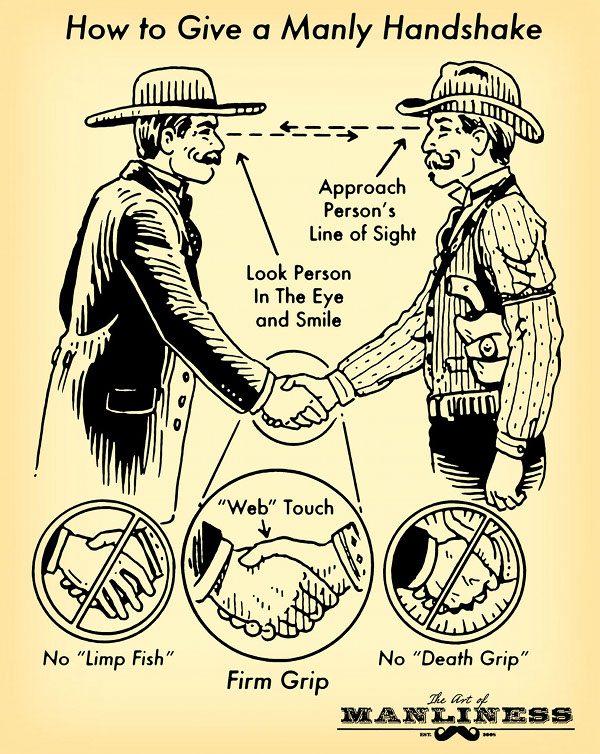
A Manly Handshake: An Illustrated Guide

Tuesday, August 16, 2011

Year 9: Are we a racist nation?

Read this article and answer the questions below on you own blog: http://goo.gl/zrTIW


  1. Who is the author and what is his job title?
  2. Who does he work for and what is supposed to do in this job?
  3. What does the author say is often the beginning of a racist comment? Have you every heard anyone use this line to say something racist? If so, what did they say?
  4. What percent of Australians are born overseas or have an overseas parent?
  5. What is a 'monoculture'?
  6. What are some welcome benefits of online technology?
  7. What are some unwelcome results of online social media?
  8. What makes racism online so dangerous?
  9. What will help stop racism online?
  10. What does the author suggest we need to do to stop racism?

Friday, August 5, 2011

Year 9: How has Australia changed in your life time?

List some of the ways that Australia has changed in your life time.

Use the following categories: physical change, socio-economic change, and cultural change. Have five changes for each category.

Choose ONE example from each category (three total). What are some of the ways that we can find out how Australia has changed in each of these categories? What research could we do to figure out how Australia has changed?

For each of the THREE from above find an answer. Then write a paragraph about how you think the information you have found has led to change in Australia. (put all this information in the same blog post)

Year 10: Assessment Task 4: Australia's Regional and Global Links

So you guys have the latest assessment (see below) due Friday 19 August. And, as I promised, you guys are more than ready to go on this one. Most of the work that you did on your website will be directly applicable to this assignment. (If only you put a bit more effort and completed the work.)

What do you need to do today?

  1. Read the assessment (including the marking criteria).
  2. Ask questions about the assessment.
  3. Listen to Mr. Cav talk to you about the assessment (and hope he doesn't get too long-winded or whack me in the head with his crazy hand gestures). 
  4. Choose two countries.
  5. Get started.


Cav's Initial Points:
  • Don't just transfer the work you did on the website task to this assessment. You certainly will used a bunch of the info but you'll need to upgrade the detail level and dig a bit deeper in your research.
  • CITE YOUR SOURCES!!! This assignment is notorious for plagiarism. As a result every Geo teacher is on red alert looking for a suspicious sentence. DON'T DO IT! You will have all the time necessary to put this work into your own words. This doesn't mean that you shouldn't use other people's work. It means you have to give them credit when you do. Anytime you include something that you didn't think of yourself give credit to where the idea came from.
  • Make it look good. Using visual elements in your presentation. Maps, graphs, images, ect. are highly encouraged and can really take you work to the next level. But, just having images isn't effective. If you don't use them well and/or they are poorly presented, it can detract from the quality of your work, not enhance it.
  • Write well. There is always a tendency to put something together that is a missmash of factual information that together makes little sense and is painful to read. This should read well and my suggestion is that you write it similar to an opinion piece like the one we read on Australian Aid. Take a position regarding Australia's relationship to the country that you choose. You will certainly need to included factual information to make your point and include information that may be against your position, but come to conclusions about how Australia relates to this country in the present, past and future.
  • RESEARCH! The tendency is to dive in and go 'control c' 'control v' crazy on Wikipedia and other informative websites. These are useful websites but they won't help you with my previous point. You need to get on Google news and do some searching. Read the articles that come up and start to formulate an opinion while gathering important information (and keeping a record of sources for your bibliography). There is a good aphorism for this task and for most in our lives. If you only have so much time to chop down a tree, spend most of it sharpening the blade. Do your research and the writing part (chopping the tree) will come so much easier. (And what you produce will be of infinitely greater quality.)

Wednesday, August 3, 2011

Year 10: Trade: ASEAN members start moves to harmonize policies | BusinessWorld Online Edition

ASEAN members start moves to harmonize policies | BusinessWorld Online Edition


  1. What is the goal of this ASEAN meeting?
  2. What is ERIA? What do they intend to do?
  3. What is AEC? What do they intend to do?
  4. What are the three key areas of focus?
  5. How often does this group plan to meet?
  6. What do they intend to keep in their "knowledge bank"?
  7. Who was the chairman of the meeting? What is his title? What is the population and GDP of his country? How does it compare to Australia?
  8. What do you think that economic integration means? 
  9. Do you think that this is good or bad for Australia?

Monday, August 1, 2011

Year 10: Military - China

READ: http://goo.gl/Omvid


  1. What does the authour mean when he says that there is a 'strategic shadow' that looms over everything? How does this relate to the US?
  2. What does the author propose regarding uranium sales to India?
  3. What mistakes does the author say that Gillard has made in the region?
  4. How has China save us from these mistakes?
  5. What does the quote 'cleaving close to the US and close to us' mean?
  6. What has China forced regarding coordination btw Australia and the US?
  7. Who will be conducting the Australia Defense Force Posture review? What were their former posts in the government?
  8. What five areas will they focus on?
  9. What does the author suggest is the most important part of the review? Why?
  10. What does having a stronger military presence in the north of Australia do for the future? More or less conflict? Why?
  11. How is China leading an arms race in the Asia Pacific?
  12. In 2008, what did Rudd predict for military spending in the region?
  13. How did Brendan Nelson and Malcolm Turnbull get it wrong regarding China and Rudd get it right?
  14. What does Australia seek to do with China?


Saturday, July 30, 2011

Year 10: Military - US/Australia Alliance

READ: http://goo.gl/z6REc


  1. Who is Steven Smith and what important role does he play for the Australian Government?
  2. What is the Brookings Institution where Mr. Smith delivered his speech?
  3. What role does the Australia/US Alliance play in Australia's 'strategic and security arrangements'?
  4. What is important about Australia's global location for this alliance?
  5. What contributions has Australia made to this alliance for the last 50 years?
  6. What did the minister say about the Australian companies who do business with the US?
  7. Why does the minister point out this information about this company? What does it highlight about the relationship between Australia and the US?
  8. What is the country central to Australia's relationships in the region?
  9. What is Australia trying to foster with this country?
  10. Why do you think that this is important to Australia?


READ: http://goo.gl/6uKoG


  1. What is the US planning on locating in Australia? Where? Why?
  2. What implications does this have on the coordination between Australian and American forces?


Wednesday, July 27, 2011

Year 10: Immigration

  1. What is an asylum seeker?
  2. What reasons would they leave their country and come to Australia?
  3. What reasons will allow them to be approved for asylum?
  4. From what countries are most asylum seekers coming?


Questions:

  1. What is the deal between Australia and Malaysia? (What are the numbers of people being 'swapped'?)
  2. What rights will they have in Malaysia which will allow them to support themselves?
  3. How does Malaysia normally treat illegal immigrants?
  4. Are children being sent to Malaysia?
  5. What is going to happen to the processing of the 500+ people currently in Australia who have arrived from the 7th of May?
  6. What do refugee advocates worry about for the 800 asylum seekers?
  7. What is the goal of this 'swap' program?
  8. Do you think that it will work? Why/why not?

For help answering these questions read this article: http://goo.gl/0L3wr

Sunday, July 24, 2011

Year 10: Monday 25/7 Period 4

Have a read of this article: http://goo.gl/nMM8W

Answer the following questions:


  1. What title does Kevin Rudd have in the Australian Government? Explain what this role entails.
  2. What is Kevin Rudd's concern?
  3. What forum was he at to express his concerns?
  4. What actions have North Korea performed recently which have Rudd alarmed and the region lacking stability?
  5. What is a 'direct threat' to Australia according to Rudd?
  6. What do you think that Rudd is trying to accomplish diplomatically by calling out his North Korean counterpart publicly? How does this relate to Australia's relationship and role in the region? 
  7. How does this relate to Australia's relationship to major allies?

Wednesday, July 20, 2011

Year 10: Australian Aid

  1. Read this article: http://www.smh.com.au/opinion/politics/were-not-really-helping-20110718-1hlhr.html
  2. Summarize the article in dot points on your blog and then write a paragraph stating your view on what the author is presenting.
  3. Why do you think Australia is giving more Aid? What would be the benefits of such a policy? What would be the negatives?
  4. Discuss Article as Class

Monday, July 18, 2011

Year 9: Tue 7/19 Research Action Project

1. Discuss assessment and hand back for class (must return at end of class)
2. How to do research?
3. Presentation/Discussion:  Subjective vs. Objective Research
        - What is the difference?
        - What value do they play in research?
        - How to conduct Subjective/Objective Research?

Year 10: Tuesday 19/7

1. Review and Discussion of the Oz in the Region Project
2. CLASSWORK: Blog Post w/ reflection of project, how they worked and how group worked.
3. Discuss general findings.
4. On board: list major concerns for Oz for Aid, Diplomatic Communication, Culture, Defense, Migration, Tourism, Trade, Sport.
5. HW: improve/complete your projects